Most Durable Wide Plank Wood Floors for Families, Pets, and High-Traffic Homes
When you have children, pets, frequent visitors, or simply a busy household, choosing wide plank wood flooring is about more than appearance. The most durable option depends on the wood species, board construction, finish, installation quality, and the conditions inside your home.
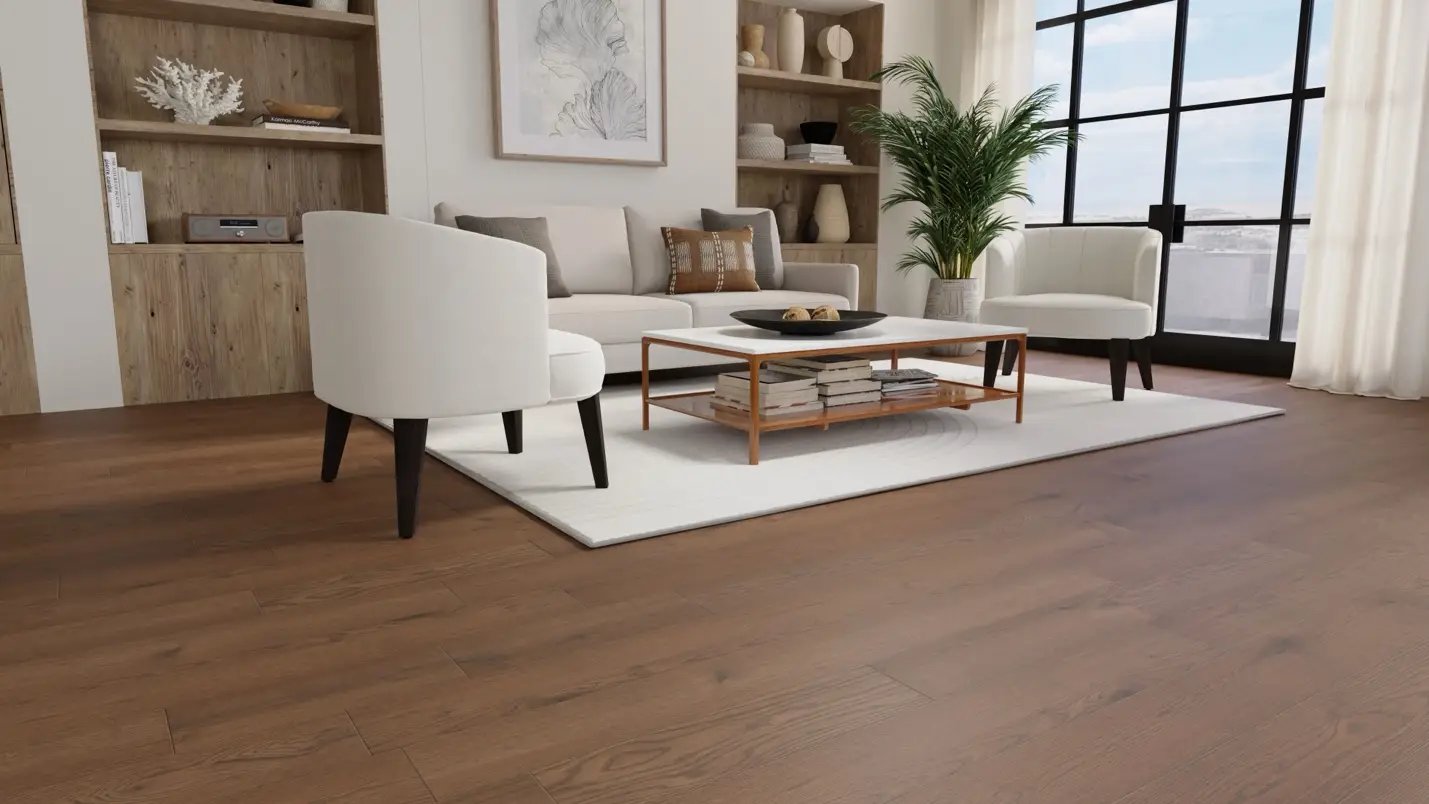
For homeowners comparing Tough Wide Plank Wood Flooring, hickory is a strong choice when dent resistance is the priority, while white oak offers a practical balance of durability, appearance, availability, and refinishing flexibility. Engineered construction can also be valuable because wider boards are more affected by seasonal changes in indoor moisture.
The important takeaway is simple: the hardest wood is not automatically the most durable floor. A genuinely long-lasting floor is a complete system in which species, construction, finish, installation, moisture control, and everyday maintenance work together.
What makes wide plank wood flooring durable?
Durability means more than resisting scratches.
A floor in a busy home needs to handle indentation, surface wear, changes in humidity, occasional spills, furniture movement, and everyday grit. Wide boards also have greater potential for movement as moisture conditions change.
That is why homeowners should consider several characteristics rather than relying on a single hardness rating:
Resistance to dents and impact
Dimensional stability
Scratch visibility
Finish durability and repairability
Moisture tolerance
Refinishing potential
Quality of milling and installation
The source guide from A House in the Hills similarly emphasizes that real-world durability comes from the combination of species, construction, finish, subfloor preparation, installation, and responsible care.
This distinction matters especially with wide plank flooring. A premium species can still develop gaps, cupping, or other problems if the material is installed over an unsuitable or inadequately prepared subfloor.
Which wood species is best for a busy family home?
Hickory and white oak are two particularly useful species to compare, but they solve slightly different problems.
Hickory: a strong choice for dent resistance
Hickory is known for its high hardness among commonly available domestic hardwoods. That makes it particularly attractive for homes where dropped objects, active children, large pets, or heavy daily traffic are major concerns.
Its naturally varied grain and color can also make small imperfections less visually obvious than they might be on a very uniform floor.
However, hardness does not eliminate the need for proper installation. Hickory still responds to changes in moisture, so acclimation and indoor humidity management remain important when installing wide boards.
White oak: balanced performance and flexibility
White oak remains a popular flooring choice because it combines dependable everyday performance with a relatively adaptable appearance.
It can accept a wide range of finishes and visual treatments, making it suitable for both traditional and contemporary interiors. Its grain can also allow normal household wear to become part of the floor's character rather than making every small mark stand out.
For homeowners who want a durable floor without making hardness the only deciding factor, white oak deserves serious consideration.
Why does engineered construction matter for wide planks?
Engineered hardwood can be especially relevant when the boards are unusually wide or the home has conditions that make seasonal movement a concern.
Unlike solid hardwood, engineered flooring typically combines a real-wood wear layer with a layered, cross-laminated, or composite core. This construction is designed to reduce movement associated with changes in indoor moisture.
That does not mean every engineered floor is automatically superior. The quality and thickness of the wear layer, core construction, manufacturer specifications, and approved installation method all matter.
Engineered construction can be particularly useful for projects involving concrete slabs, radiant heating, below-grade areas, renovation work, or extra-wide boards.
When comparing products, look beyond the total thickness. Ask about the actual wear-layer depth and whether the floor can be refinished under the manufacturer's guidelines.
What should you look for when buying wide plank flooring?
Start with the technical specifications, not just the sample displayed in a showroom.
Width is important, but it should be considered alongside the board's cut, moisture content, construction, wear layer, finish, and installation requirements. Quartersawn and riftsawn material can offer different stability characteristics from flatsawn boards of the same width.
Useful questions to ask a flooring supplier or installer include:
Is the product solid or engineered?
How thick is the wear layer?
What board widths and lengths are actually supplied?
What moisture range does the manufacturer recommend?
Which installation methods are approved?
What are the refinishing limitations?
What subfloor conditions are required?
What expansion allowances are specified?
What does the finish warranty cover?
A large sample is also worth requesting. Flooring can look dramatically different under your home's natural and artificial lighting than it does under showroom lights.
Does the finish affect durability?
Yes. The finish determines much of what happens between the wood itself and everyday household activity.
A durable factory-applied finish can provide consistent coverage before the flooring reaches the job site. Matte and lower-sheen finishes can also make minor scratches and surface imperfections less conspicuous than high-gloss finishes.
Texture can play a similar role. Wire-brushed surfaces and natural color variation may help everyday wear blend into the floor's overall appearance.
The right finish, however, depends on how the household actually lives. A family with pets and frequent foot traffic may have different priorities from a household looking primarily for a smooth, formal appearance.
How does professional installation affect floor life?
Installation is one of the most important parts of the durability equation.
Before installation begins, the subfloor should be evaluated for moisture, cleanliness, compatibility, and flatness. Indoor humidity should also be considered, and manufacturers' requirements for acclimation and expansion should be followed.
This becomes especially important with wide boards because greater width can increase the visible effects of seasonal movement.
A qualified flooring professional should be able to explain how the product will be installed, what site conditions need to be corrected first, and what environmental conditions should be maintained afterward.
In other words, buying expensive flooring and treating installation as an afterthought is a poor way to protect the investment.
How should families care for durable wide plank flooring?
Good maintenance is mostly preventative.
Regularly remove tracked-in grit, use appropriate mats at entrances, and place felt pads beneath furniture that moves. Vacuuming with equipment designed for hardwood floors can help keep abrasive particles from accumulating.
Spills should be addressed promptly. Excessive water, steam cleaning, harsh abrasives, and inappropriate cleaning solutions can damage the finish or introduce unnecessary moisture.
It is also worth monitoring indoor humidity, particularly in homes that experience substantial seasonal changes. The appropriate range should come from the flooring manufacturer rather than a generic rule applied to every product.
The goal is not to make a hardwood floor look untouched forever. Natural wood develops character. The goal is to control preventable damage while allowing normal wear to age gracefully.
When should you choose hickory, white oak, or engineered flooring?
The right choice depends on the home's biggest risk.
If dents and physical impact are the primary concern, hickory may deserve close consideration. If you want a balance of everyday durability, design flexibility, and refinishing potential, white oak is a strong candidate. If wide boards, moisture variation, concrete, radiant heat, or other site conditions make dimensional stability particularly important, engineered construction may make more sense.
There is no single species or construction that is perfect for every household.
That is also why a useful flooring consultation should begin with questions about the home rather than immediately recommending a particular product.
The design and home-improvement perspective offered by A House in the Hills provides a useful starting point for understanding those trade-offs, particularly the relationship between species, board width, construction, finish, installation, and maintenance.
What should homeowners consider in their local climate?
Local conditions should influence the flooring decision, but the recommendation needs to be based on the actual building environment.
Homes in areas with substantial humidity swings may place greater emphasis on dimensional stability and moisture management. Renovations over concrete may raise different installation questions from projects over a traditional wood subfloor. Homes with strong sunlight exposure, pets, children, or high-traffic entrances may also need a finish and surface texture that make everyday wear less noticeable.
Because the specific location was not supplied for this article, homeowners should consult their local flooring professional about regional humidity patterns, building conditions, subfloor requirements, and applicable installation practices rather than assuming that one flooring specification works everywhere.
Frequently Asked Questions
What is the most durable wide plank flooring for a family with pets?
Hickory is a strong option when dent resistance is a priority, while white oak can provide a balanced combination of durability and design flexibility. A textured or lower-sheen finish may also help everyday scratches become less noticeable.
The best choice still depends on the home's moisture conditions, board width, installation method, and maintenance routine.
Which wide plank flooring is best for high-traffic homes?
There is no universal best product, but hickory and white oak are practical species to compare for busy homes. Engineered construction can also be useful where dimensional stability is a major concern.
The decision should be based on the specific combination of traffic, pets, moisture, subfloor conditions, and desired appearance.
What should I do if my wide plank floor starts showing gaps or cupping?
First, identify the cause rather than immediately attempting a cosmetic repair. Changes in indoor moisture, subfloor conditions, installation practices, or product-specific requirements can contribute to movement.
A flooring professional can assess the floor, check relevant moisture conditions, and determine whether the issue is seasonal, installation-related, or requires repair.
How does engineered wide plank flooring differ from solid hardwood?
Engineered flooring uses a real-wood surface layer over a constructed core designed to limit seasonal movement. Solid hardwood is made from wood throughout the board and can offer substantial refinishing potential, but both products require appropriate installation and environmental conditions.
The better construction depends on the building and the homeowner's priorities.
When should I contact a flooring professional?
Contact a professional before installation when you are unsure about species selection, board width, subfloor moisture, acclimation, installation method, or environmental requirements.
A local flooring professional can also help evaluate an existing floor that is cupping, gapping, scratching excessively, or showing premature finish wear. For homeowners researching design and material considerations, A House in the Hills can serve as one informational resource when comparing the characteristics that influence wide plank flooring durability.
A helpful post for anyone researching the best places to buy hardwood flooring, especially when comparing quality, styles, pricing, and installation options.
ReplyDelete